
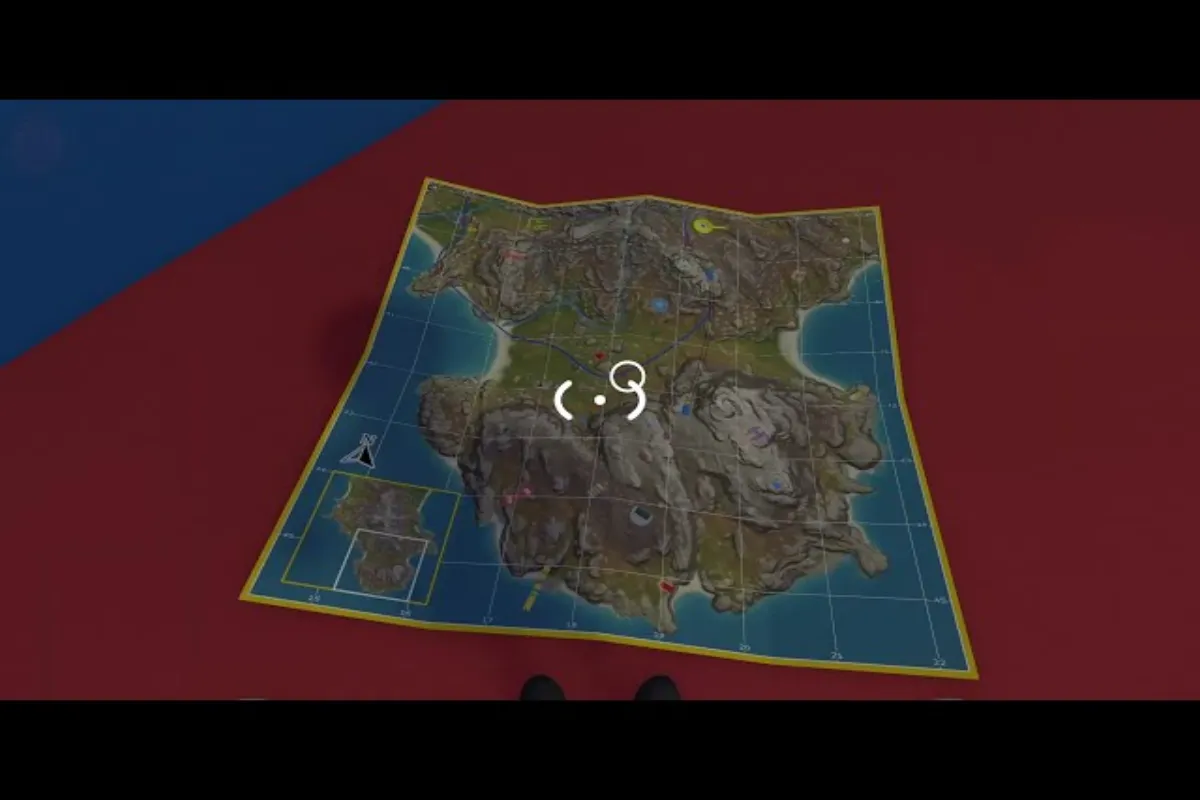
The Big Walk world map is one of the most quietly ambitious open environments in recent indie releases, and learning how to read it is the difference between a two-hour stroll and a hundred-hour friendship-saving expedition. Inspired by Wilsons Promontory National Park, the development team spent six years crafting an Australian bushland dense enough with biomes that even observant players miss entire zones on their first run. Understanding the layout matters because Big Walk drops you in without a HUD compass, minimap arrows, or quest pins, leaving the horizon line, the sun's position, and group conversation as your only tools.
Big Walk World Map Overview and Layout
The Big Walk world map is structured around a winding spine trail that threads a series of distinct biomes together rather than presenting a single contiguous continent. According to the official presskit, the open world is "inspired by Wilsons Promontory National Park," which means the geography is rooted in real Australian terrain — granite peaks, coastal heath, temperate rainforest, and tidal inlets all sit within walking distance of one another, separated only by short transitional stretches of bush.
The developers confirmed in a GamesIndustry feature on their six-year journey that the world was built around negative space design: no big arrows, no guidance markers, and the only navigation tools are observation and discussion with the other walkers in your group. That is not a design oversight; it is the entire point of the experience, and it is why a written reference map becomes useful rather than optional. For a deeper breakdown of how the open world rewards curiosity, our Big Walk open world guide covers the philosophy in full.
Core Biomes at a Glance
| Biome | Key Features | Best Time to Visit | Difficulty |
|---|---|---|---|
| Coastal Heath | Tidal inlets, beach grass, sun-bleached rocks | Sunrise | Easy |
| Temperate Rainforest | Treehouses, fern gullies, damp earth | Midday | Medium |
| Granite Highlands | Curved ramp notes, yellow boulders, panoramic lookouts | Sunset | Medium-Hard |
| Ocean Zone | Sound shrines, driftwood, cliff edges | Any time | Easy |
| Inland Scrub | Dense bush, hidden clearings, off-path shrines | Midday | Hard |
Each biome flows into the next without a loading screen, so the boundary lines on the Big Walk world map are softer than a table can capture. Players report walking out of rainforest directly into a boulder field in under five minutes, which makes mental mapping as important as following any single path. Because the biomes overlap visually, first-time walkers often mistake the Inland Scrub for the Temperate Rainforest until they notice the absence of canopy cover.
Why Negative Space Design Matters
The choice to withhold a minimap is the most-discussed design decision in the game, and it directly shapes how the Big Walk world map gets learned. Without HUD overlays, players are forced to encode the environment through visual landmarks, audio anchors, and social memory — three layers of redundancy that experienced groups use to triangulate position even after hours of walking. The result is a map that lives inside the players' shared recollection rather than on a screen, which is what gives the game its campfire-reminiscing quality at the end of a session.
Big Walk Landmarks You Shouldn't Miss
Big Walk landmarks are designed to be discovered rather than directed toward, which means the official count is intentionally vague. The official presskit lists sound shrines, treehouses, a jungle gym, an ocean zone, curved ramp notes, and distinctive yellow boulders as the canonical reference points. The genius is in how they layer: the yellow boulders are visible from the highlands, the sound shrines emit different audio signatures per biome, and the treehouses reward vertical exploration that ground-level walkers will never attempt.
These landmarks are deliberately scattered so no two players will see them in the same order. If you are hunting every site in a single run, our complete Big Walk locations list catalogs each by biome and relative position to the spine trail.
Landmark Discovery Priority
| Landmark | Visual Cue | Audio Cue | Reachability |
|---|---|---|---|
| Sound Shrines | Wooden arch with hanging chimes | Unique tonal hum per biome | Ground level |
| Treehouses | Platform built into eucalyptus canopy | Wind through planks | Climb required |
| Jungle Gym | Rope structure in a forest clearing | Distant creaking | Ground level |
| Yellow Boulders | Bright ochre granite cluster | None | Visible from afar |
| Curved Ramp Notes | Sheet-metal ramps with painted notes | Wind whistle | Mid-trail |
The yellow boulders are arguably the most useful Big Walk landmarks for navigation because they double as visual waypoints without breaking the no-arrows design rule. Community reports suggest there are at least four major boulder clusters, each marking a transition between biomes on the Big Walk world map and each glowing brightly during the sunset window discussed later in this guide.
How Landmarks Connect the Biomes
What makes the landmark system more than a checklist is how each type bridges two or more biomes. A sound shrine in the rainforest often has a matching shrine in the highlands that shares its tonal frequency, letting players cross-reference by ear. The treehouses are physically built into the transition zones between rainforest and inland scrub, which means reaching one almost always reveals a path to the other. This is the kind of layered design that makes the Big Walk world map feel like a real place rather than a series of stitched-together levels, and it rewards players who explore laterally rather than in straight lines.
Big Walk Sunset Spots and Day-Night Cycle
The Big Walk sunset is the single most photographed moment in the game, and it is not hard to see why. According to the official presskit, the day-night cycle features "beautiful sunsets and sunrises," with nights described as "brief moments, not prolonged darkness" — meaning the development team tuned the timing so players actually get to enjoy the golden hour without rushing to find shelter. That choice reframes the entire pacing of the game, because you can plan a multi-hour walk knowing that dusk will arrive on a predictable schedule.
The best sunset vantage points cluster around the Granite Highlands biome, where the elevation gives an unobstructed western view. Players report that the yellow boulder fields catch the low light and glow for roughly ninety seconds, which is the perfect window for a group photo or a quiet moment of conversation with the other walkers.
Best Sunset Locations Compared
| Location | Vantage Type | Crowded? | Photo Quality |
|---|---|---|---|
| Granite Peak Lookout | 360° panoramic | Medium | Excellent |
| Yellow Boulder Field | Open western face | Low | Excellent |
| Coastal Cliff Edge | Ocean horizon | Medium | Good |
| Treehouse Platform | Elevated canopy view | High | Decent |
| Sound Shrine Clearing | Framed by arch | Low | Good |
For players serious about catching every Big Walk sunset, timing matters more than location. Community data suggests the sunset window runs for roughly six to eight in-game minutes and occurs approximately every twenty minutes of real-time play, depending on your position relative to the equator of the world map. If you would rather optimize for the sunrise flip side, the Coastal Heath biome offers a cleaner eastern horizon and noticeably fewer groups.
Timing the Golden Window
The ninety-second glow that makes the yellow boulders famous is the difference between a routine sunset and a memorable one. Because the Big Walk world map does not surface a clock, players have developed informal cues: the light shifts from white to amber roughly four in-game minutes before peak glow, which gives groups time to settle into position. Experienced walkers treat that color shift as a soft timer and stop moving, because the visual reward of staying still at peak glow is significantly better than catching it mid-stride.
Navigation Tips and Exploration Strategy
Mastering the Big Walk world map without a minimap requires shifting from waypoint-based play to landmark-based play. The developers described this as a discussion-driven navigation system, meaning talking to your co-op partners is literally a gameplay mechanic rather than flavor. Here are the strategies experienced players report using most often.
-
Use the sun as a compass. The sun rises in the east and sets in the west, so orienting yourself at sunrise gives you a free cardinal reference for the rest of the day.
-
Mark return paths with sound. The sound shrines are spaced far enough apart that their hum is audible from the next landmark, which lets you backtrack audibly without retracing steps.
-
Climb high before committing. The Granite Highlands offer line-of-sight to roughly forty percent of the Big Walk world map, making them the best first stop on a new run.
-
Talk to your group constantly. Co-op players report that the negative space design rewards verbal coordination — if you spot a yellow boulder, say so out loud rather than assuming someone else will.
-
Don't chase completeness in one session. The world is large enough that trying to find every landmark in a single run leads to exhaustion. Pacing matters more than coverage.
For a deeper walkthrough of pacing and route planning, our Big Walk exploration guide expands on these techniques with biome-specific checklists and group-size recommendations.
Walking Routes and Map Coverage
The walking routes on the Big Walk world map fall into three broad categories based on community-tested playthroughs. Below is a comparison of the most efficient loops players have documented, including estimated time, difficulty, and which Big Walk landmarks each route surfaces reliably.
Route Comparison Table
| Route Name | Biomes Covered | Estimated Time | Landmarks Hit | Best For |
|---|---|---|---|---|
| Coastal Loop | Coastal Heath, Ocean Zone | 45 min | Sound shrines, beach clearings | First-time players |
| Highland Traverse | Granite Highlands, Inland Scrub | 90 min | Yellow boulders, curved ramps | Sunset chasers |
| Rainforest Descent | Temperate Rainforest, Inland Scrub | 75 min | Treehouses, jungle gym | Completionists |
| Full Spine Trail | All biomes | 3–4 hours | All major landmarks | Experienced walkers |
The Full Spine Trail is the route most players describe as the true Big Walk world map experience, because it forces you to cross every biome transition at least once. According to community reports, completing the full spine in one session typically takes three to four in-game hours, which roughly maps to ninety to one hundred twenty real-time minutes if your group is moving at conversation pace rather than speedrun pace.
If you would rather cherry-pick hidden pockets the spine trail misses, our Big Walk hidden areas breakdown covers off-path discoveries like tucked-away sound shrines and the inland scrub's secret clearings, which the main routes tend to bypass in favor of efficiency.
Frequently Asked Questions
Q: Can I play Big Walk solo without other players?
While Big Walk is designed as a cooperative experience, you can explore the world solo. However, certain puzzles and areas require at least two players to complete, so solo walkers will find some content gated behind multiplayer requirements in the current version of the game.
How big is the Big Walk world map in real-world terms?
The Big Walk world map covers roughly four to six square kilometers of playable terrain according to community measurements, though the developers have not released a precise figure. For context, that is about the size of a small national park district, which is consistent with the Wilsons Promontory inspiration cited in the official presskit.
Are there any fast travel points in Big Walk?
No. Big Walk does not include any fast travel, teleporters, or vehicle systems. Movement is entirely on foot, which the developers confirmed is intentional to keep players grounded in the walking-together experience rather than skipping between zones.
Where is the best Big Walk sunset spot for group photos?
The Granite Peak Lookout offers the widest panoramic view, but the Yellow Boulder Field is more popular for group photos because of the glowing rock effect during the ninety-second golden window. Both spots are in the Granite Highlands biome and benefit from arriving ten in-game minutes before the color shift begins.
Can I see all Big Walk landmarks in a single playthrough?
Yes, but only with deliberate route planning. Players report that covering every landmark in one run requires the Full Spine Trail route plus detours into the Inland Scrub, which totals roughly four hours of focused exploration and is best split across two sessions to avoid fatigue.