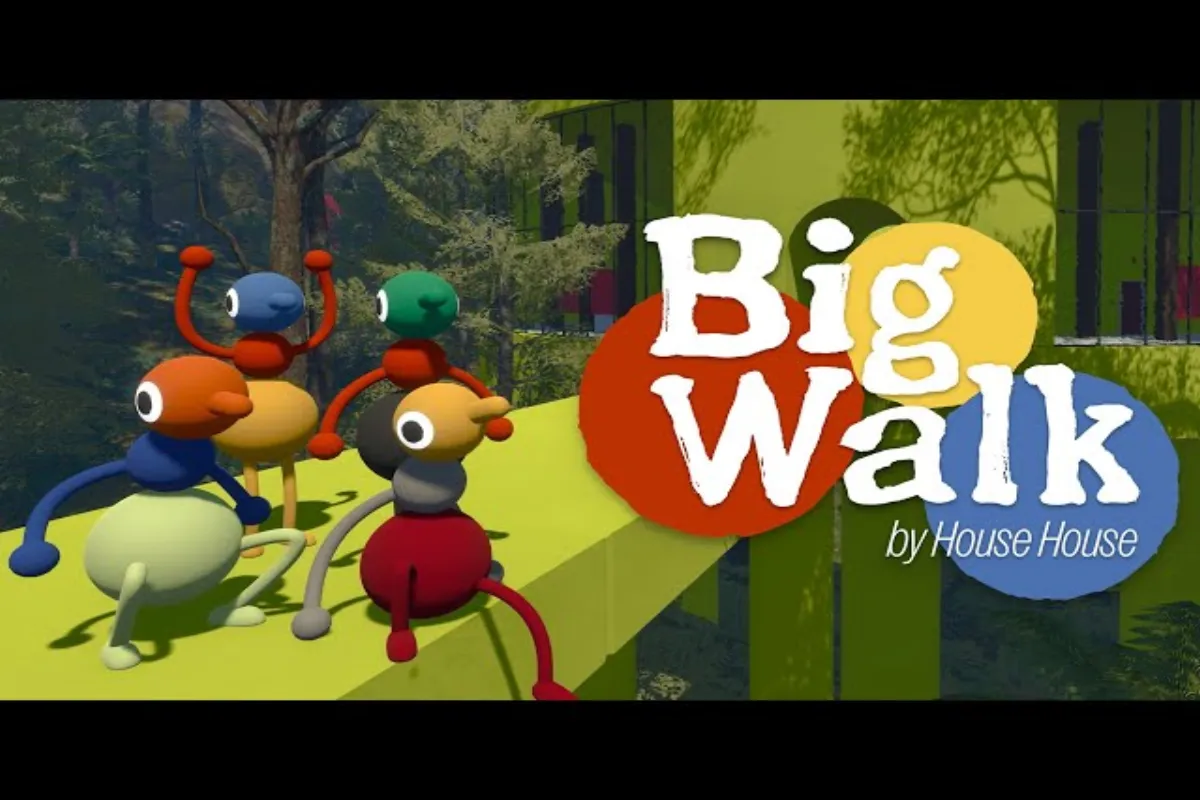
Big Walk is a co-op puzzle adventure where small groups of friends walk through talkative landscapes, solve environmental puzzles, and gradually unlock new areas through a layered progression system. Getting started means understanding the basics of movement, voice chat setup, and the signature puzzle types that define the first hour of the walkthrough.
What Big Walk Is and Why Co-op Matters
Big Walk is built from the ground up for two to four players, and the entire pacing system is tuned around cooperative play. According to the official Big Walk FAQ, the developers positioned the game as a social experience first and a puzzle experience second, which is why the title integrates voice chat directly into the onboarding flow rather than relying on external apps.
When you first launch the game through the Big Walk Steam page, you are greeted by a clean lobby system that lets you invite friends, configure audio, and select a session type. The opening hour is roughly designed to walk you through three foundational concepts: basic movement, environmental scanning, and your first co-op puzzle. For a broader look at how these systems connect, the Big Walk beginner guide covers the deeper mechanics in detail.
Who Big Walk Is Designed For
Big Walk appeals to a wide range of players, but the experience tends to land best with specific audiences:
-
Casual co-op groups who want a low-pressure social session
-
Puzzle enthusiasts who enjoy walkthrough-heavy titles with frequent checkpoints
-
Friend groups looking for a shared experience that runs two to four hours at a time
-
Solo players who want to test creative thinking across multiple puzzle rooms
Core Pillars of the Experience
| Pillar | Description |
|---|---|
| Co-op focus | Designed for 2-4 players with built-in voice chat |
| Puzzles | Crane, relay, glass wall, switch, and layered variations |
| Progression | Area unlocking with puzzle scaling mechanics |
| Atmosphere | Walkable, charming landscape with frequent dialogue |
System Requirements and First-Launch Setup
Before you begin your Big Walk getting started journey, you need to confirm your PC can run the game comfortably. The store page lists the official specs, but the table below summarizes the baseline and recommended targets based on community testing as of 2026.
| Component | Minimum | Recommended |
|---|---|---|
| OS | Windows 10 (64-bit) | Windows 11 (64-bit) |
| CPU | Intel i5-4590 / AMD FX-8350 | Intel i7-7700 / AMD Ryzen 5 2600 |
| RAM | 8 GB | 16 GB |
| GPU | NVIDIA GTX 960 / AMD R9 280 | NVIDIA GTX 1660 / AMD RX 590 |
| Storage | 12 GB HDD | 12 GB SSD |
Configuring Your First Session
Once the game is launched, the first task is to set up your lobby profile. This includes choosing a display name, selecting your preferred microphone input, adjusting voice chat volume thresholds, and confirming your keyboard and mouse bindings. Skipping this step is one of the most common causes of frustration in the first session, because default bindings occasionally conflict with how players are used to handling crane controls.
Voice Chat and Connectivity
Big Walk passes voice chat through its own server layer, which means you do not need a third-party Discord call to communicate with your group. According to the official FAQ, the system is encrypted and supports both push-to-talk and open-mic modes. If you prefer external apps, Steam Remote Play also works without noticeable latency, as reported by PC Gamer's co-op deep dive.
Your First Hour Walkthrough
The first hour of Big Walk is essentially a guided tutorial. Game Informer's preview described the opening as "a walk well wasted" because the pacing is intentionally gentle, which gives new players breathing room to learn puzzle mechanics without panic. During this stretch, you will encounter the first crane puzzle, which teaches you how to lift and lower objects using environmental controls.
The Crane Puzzle
The crane sequence is your introduction to multi-step coordination. One player operates the crane arm, while another guides the load to its target zone. The puzzle scales in difficulty as you add more players, because the crane pivot timing has to be synchronized with marker signals on the ground.
| Step | Action | Suggested Role |
|---|---|---|
| 1 | Anchor the crane base | Player 1 |
| 2 | Lower the hook | Player 1 |
| 3 | Attach the load | Player 2 |
| 4 | Lift and rotate | Player 1 + Player 2 |
| 5 | Drop into target zone | Player 2 |
The Relay Puzzle
Right after the crane, you encounter the relay puzzle, which is built around signal chaining. Players must activate switches in a specific order, and each switch unlocks the next. Timing matters because some switches reset if held too long. This is the first puzzle in the Big Walk walkthrough where your co-op guide must emphasize callouts, since miscommunication causes the chain to fail and restarts the sequence.
The Glass Wall and Switch Puzzles
Once you clear the relay, you move into the glass wall sequence, which tests observation skills. Players can see each other through transparent walls but cannot physically interact across them until a switch is flipped. The puzzle forces you to coordinate visually, which is why the community frequently recommends having at least one player call out switch positions rather than running silently. For a deeper look at how this fits into the broader puzzle scaling system, the Big Walk gameplay guide covers layered mechanics in detail.
Co-op Strategies and Communication
A Big Walk co-op guide is incomplete without a section on communication. Even with the built-in voice chat, success depends on how well your group handles their roles. Experienced players on community forums suggest assigning roles early, particularly for puzzles that scale in complexity as new areas are unlocked.
Role Assignment for Larger Groups
| Role | Responsibility | Best For |
|---|---|---|
| Navigator | Reads the environment, calls out switch positions | Large co-op groups |
| Operator | Handles timed puzzle inputs | Crane, relay puzzles |
| Spotter | Watches partner's screen for missed details | Glass wall puzzles |
| Anchorer | Holds the team at safe checkpoints | Mid-game replays |
Common First-Day Mistakes
According to community reports, the most common first-day mistake is treating Big Walk like a single-player puzzle game. The puzzles are designed to be tackled from multiple angles, and forcing one player to do everything leads to friction. The second most common mistake is skipping the walkthrough tutorial, which leaves new players confused about the puzzle scaling system that gradually increases difficulty as you unlock more areas. The third mistake is failing to use the deserter recovery system when a teammate disconnects, which causes unnecessary restarts.
Progression and Area Unlocking
Progression in Big Walk is handled through a soft gating system rather than hard level locks. Each area you complete unlocks adjacent terrain, and the difficulty of puzzles scales based on how many areas you have charted. This means your walkthrough gets more challenging as you expand your map, but never in a way that blocks progress entirely.
The Area Unlocking Flow
| Stage | Area | Puzzle Type Introduced |
|---|---|---|
| 1 | Opening Fields | Crane, relay |
| 2 | Crossroads | Glass wall, switch |
| 3 | High Cliffs | Multi-step crane variations |
| 4 | Echo Bay | Signal relay chains |
| 5 | Far Garden | Mixed-sequence puzzles |
Long-Term Goals and Replay Value
Long-term, Big Walk rewards players who revisit early areas with new tools. The Big Walk complete guide covers how re-exploration unlocks hidden dialogue and cosmetic rewards, while 100% playthroughs require finding every secret room scattered across the map. These rewards are optional, but they extend total playtime for groups who finish the main walkthrough in roughly six to eight hours. Completionist groups frequently report a 12-15 hour total, depending on group size and how much time is spent on dialogue branches.
Frequently Asked Questions
Q: Can I play Big Walk solo without other players?
While Big Walk is designed as a cooperative experience, you can explore the world solo. However, certain puzzles and areas require at least two players to complete, so solo walkers will find some content gated behind multiplayer requirements in the current version of the game.
How long does Big Walk take to finish the main story?
The main story walkthrough takes about six to eight hours for a typical two-player group, based on community playthrough data. Completionist groups who chase every secret room and dialogue branch can push that to 12-15 hours. The pace scales with the size of your co-op group, since larger teams tend to solve puzzles faster but spend more time on callouts.
Can I play Big Walk solo?
Yes, but the experience is designed for co-op. Solo players can still progress through the Big Walk walkthrough, though certain puzzles like the relay chain require AI companions to fill in for missing players. The result is playable but loses the social layer that defines the game, which is why most solo players eventually switch to a two-player setup.
Does Big Walk support cross-play?
Currently, Big Walk is available on PC via Steam, and cross-play between different storefronts is not supported as of 2026. PC players can, however, use Steam Remote Play to invite friends on other platforms for local couch co-op sessions, which the official FAQ covers in detail.
What happens if my friend disconnects mid-puzzle?
If a player drops mid-puzzle, Big Walk has a deserter recovery system that lets the remaining players continue with reduced difficulty scaling. The disconnected player can rejoin within five minutes without losing progress, which is helpful for groups with unstable internet connections.