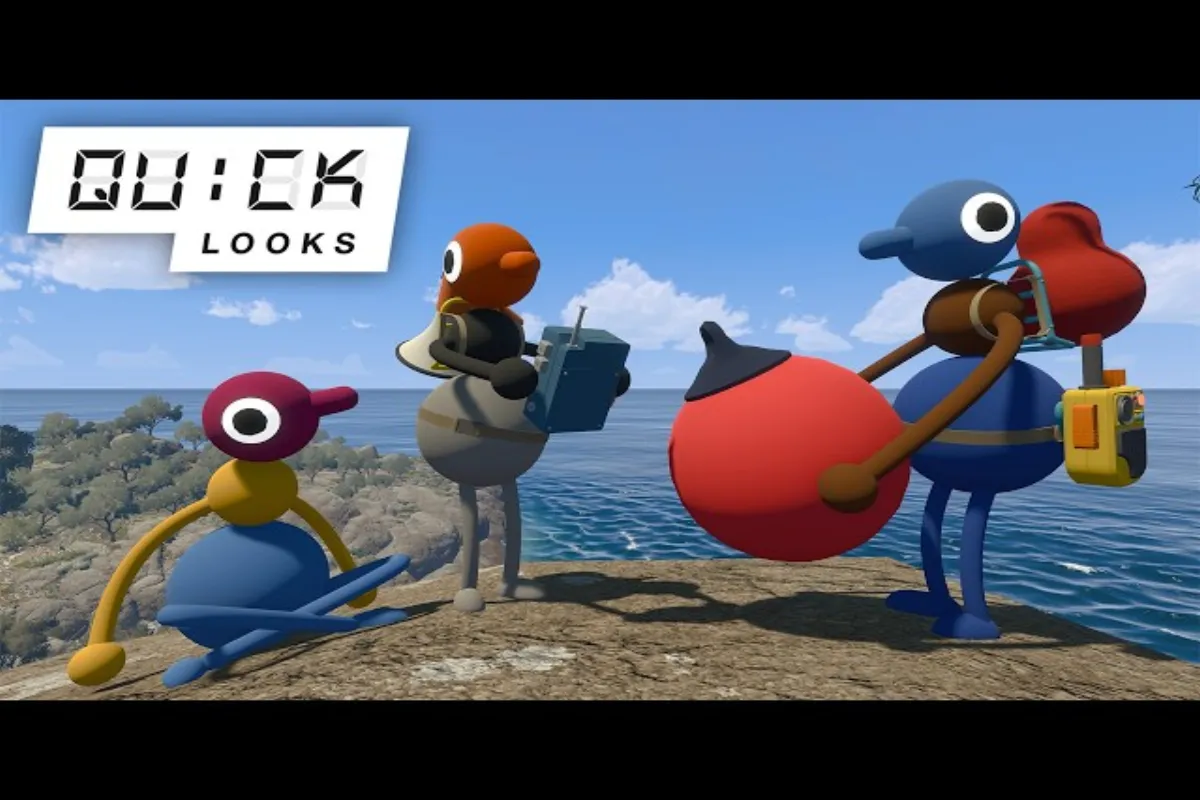
Big Walk how to play becomes intuitive once you understand proximity voice, gesture controls, and tool-based puzzles. This co-op walkthrough explains every mechanic and replayability hook you need before queuing up with your crew.
Getting Started With Big Walk How to Play
Big Walk drops you into a bright open world designed for 2 to 12 players, but the official FAQ confirms that smaller crews of three to four can comfortably clear every area if they coordinate well. Before your first run, choose a session host, confirm everyone has a working microphone, and decide whether you want a casual stroll or a focused puzzle-solving sprint. The host controls lobby settings such as region, crew size cap, and whether progression saves to a checkpoint or rolls over per session.
The onboarding tutorial takes about fifteen minutes and teaches three foundational skills: walking, gesturing, and grabbing. Walking is the default movement style and keeps your hands free to pick up items. Gestures are mapped to face buttons and serve as your only mid-action communication tool when voice chat drops out, while grabbing lets you carry throwable objects between players. Skipping the tutorial is not recommended because the gesture vocabulary returns constantly across every later puzzle type.
If you are entirely new to the genre, our beginner guide covers the absolute basics in even more detail. Returning players can skip ahead, but a quick gesture refresher before queuing prevents the silent-run confusion that community data says plagues most first-time crews.
| Crew Size | Best Use Case | Puzzle Coverage | Voice Chat Load |
|---|---|---|---|
| 2 players | Solo + one partner runs | Roughly 70% of puzzles | Light |
| 3-4 players | Standard recommended crew | 100% of standard puzzles | Balanced |
| 5-8 players | Social or chaos runs | 100% plus bonus rooms | Heavy |
| 9-12 players | Event or marathon lobbies | Optional secret content | Requires discipline |
Game Overview and Player Count
The official site confirms Big Walk is built around proximity voice, meaning players only hear each other when they stand close together. That single rule shapes everything: split up and you cannot coordinate, huddle up and you solve faster. Player count also influences spawn density, so larger crews encounter more puzzle rooms while smaller crews face tighter layouts. Most reviewers on PC Gamer praised the four-player sweet spot because it keeps everyone within voice range without overwhelming the chat layer.
Controls, Gestures, and Movement
Your controller layout includes a face-button gesture wheel, two shoulder buttons for grab and throw, and the triggers for crouch and lean. Lean is the most underrated tool because it lets you peek over ledges, reach high objects, and trigger pressure plates without committing your full body to the action. Movement speed is intentionally slow, which encourages planning before every dash, and that pacing is the foundation of the entire Big Walk walkthrough philosophy.
Core Mechanics Every Big Walk Walkthrough Covers
Every puzzle in Big Walk rests on three pillars: proximity voice, item interaction, and environmental observation. Proximity voice is the game's signature mechanic and it forces crews to physically cluster when solving complex tasks. Item interaction means you can only carry one object per hand and most puzzles require two or more items to combine, which automatically demands cooperation. Environmental observation rewards crews who read the world before touching anything, since visual cues often telegraph the exact tool needed for the next room.
Community testing on the network-issues beta branch suggests the developer is actively tuning proximity falloff curves for clarity, so expect minor balance adjustments across patches. According to PC Gamer's hands-on preview, the moment a crew learns to talk and move together, the puzzle difficulty curve flattens dramatically. That single shift from solo thinking to shared problem-solving is what separates a smooth walkthrough from a frustrating one.
| Tool Category | Example Items | Primary Puzzle Role | Hand Required |
|---|---|---|---|
| Throwable | Barrels, crates, fruit | Switch triggers, pressure plates | One |
| Connector | Rope, chain, planks | Bridge gaps, hoist players | Two |
| Light Source | Lantern, torch, glowstick | Reveal hidden walls | One |
| Sound Source | Bell, horn, whistle | Trigger distant switches | One |
| Heavy Object | Anvil, statue, log | Hold pressure plates | Two |
Proximity Voice Communication
Voice range is roughly the diameter of a small plaza, so players outside that bubble hear nothing. This is a feature, not a bug, because it forces split crews to make a choice: stay close and coordinate, or stay apart and lose communication. Best practice is to keep one anchor player in voice range with the puzzle while a runner fetches required items from neighboring rooms. That single division of labor cuts most puzzle times in half.
Tool Usage and Item Synergy
Most puzzles require two complementary tools in two different hands, which means crews must plan the order they pick up objects. Connector items like ropes and planks are the most common demand, and they always take both hands, so dropping them mid-puzzle is a frequent rookie mistake. Pairing a throwable with a light source creates a thrown lantern trick that several puzzle rooms expect, while combining sound sources with throwables enables long-range signaling that saves minutes of running.
Big Walk Walkthrough of Common Puzzle Types
The standard Big Walk walkthrough cycles through five recurring puzzle archetypes, and mastering them unlocks almost every room in the game. The first archetype is the crane puzzle, which requires one player to operate a hook while another guides the load with ropes. The second is the relay puzzle, where items must travel through a chain of stations before reaching a final trigger. The third is the switch puzzle, where multiple pressure plates must be held simultaneously, usually by standing on them or placing heavy objects.
The fourth archetype is the glass wall puzzle, which conceals a room behind a transparent barrier that only reveals itself when lit from the correct angle. The fifth is the elevator puzzle, which combines weight management with timed synchronization. Each archetype scales in difficulty as you progress, but the underlying logic never changes, which is why a single walkthrough of these five types prepares you for roughly 80% of the game's content.
| Puzzle Type | Players Needed | Common Tools | Typical Solve Time |
|---|---|---|---|
| Crane | 2-3 | Rope, hook | 2-4 minutes |
| Relay | 3-4 | Crates, conveyor items | 3-5 minutes |
| Switch | 2-4 | Heavy objects, barrels | 1-3 minutes |
| Glass Wall | 2-3 | Lantern, mirror | 4-6 minutes |
| Elevator | 3-5 | Weighted crates, ropes | 5-8 minutes |
Crane, Relay, and Switch Puzzles
Crane puzzles feel intimidating but rely on a single rule: the operator must keep tension on the hook while the spotter guides the load. Relay puzzles reward the crew that plans the chain order before picking up the first item, because rearranging mid-run wastes time. Switch puzzles look chaotic, but the trick is to assign each plate a permanent holder so the rest of the crew can finish secondary objectives without babysitting.
Glass Wall and Environmental Obstacles
Glass wall puzzles hide their logic behind lighting, which means your light source tool matters more than your eyes. Walk around the perimeter before committing to a position, because the correct angle is rarely the most obvious one. Environmental obstacles such as wind, ice, and unstable platforms introduce physics unpredictability that grows with crew size, so larger crews should expect to retry these rooms more often.
Big Walk Replayability and Long-Term Progression
Big Walk replayability comes from three layers: unlockable cosmetics, scaling difficulty, and secret areas that only appear under specific crew conditions. Cosmetics include hats, walking styles, and gesture packs that drop from hidden chests scattered across the open world. Scaling difficulty activates when you beat the main adventure with a full crew, unlocking a hard mode that doubles puzzle complexity but also unlocks the rarest cosmetics. Secret areas require either a minimum crew size or a maximum one, depending on the trigger, which means solo runs and full-lobby runs each reveal different content.
According to Game Informer's preview coverage, the developer confirmed that progression saves are tied to your host profile, so the same crew configuration can replay puzzles with the same unlocks intact. Community data from Reddit suggests a typical completionist run requires roughly 25-30 hours spread across at least four distinct crew compositions. That variety is the real engine of Big Walk replayability, since each new crew configuration forces you to rethink your tool assignments and voice coordination patterns.
| Replay Layer | Trigger Condition | Reward Type | Estimated Hours |
|---|---|---|---|
| Standard Clear | Beat main adventure | Basic cosmetics | 6-8 hours |
| Hard Mode | Beat with 4+ crew | Rare cosmetics, secret rooms | 8-10 hours |
| Solo Run | Complete entire game alone | Exclusive gestures | 10-12 hours |
| Full Lobby | Complete with 10-12 players | Event-only cosmetics | 8-10 hours |
| Completionist | All of the above | Achievement badge | 25-30 hours total |
Difficulty Scaling and Unlockables
Hard mode does not just add hit points or timers; it rearranges puzzle rooms entirely. Expect familiar rooms with reversed solutions rather than the same rooms with more enemies. Unlockables include gesture packs that only drop in hard mode, so players chasing 100% completion must run the harder configuration at least once.
Save System and Multi-Session Play
The official Big Walk FAQ confirms that the host profile saves every 15 minutes and that progression persists across sessions, so you can pause mid-puzzle without losing item placements. Crew members who join mid-session can carry forward their personal cosmetics, but puzzle progress is shared, which encourages consistent crews over rotating rosters.
Advanced Big Walk Walkthrough Tips for Veteran Crews
Once you understand the basics, a few advanced habits separate smooth crews from struggling ones. Pre-planning every room by walking the perimeter before touching anything saves more time than any speedrun technique. Assigning a permanent communicator who calls out puzzle steps out loud prevents the silence that kills coordination, even on crews where everyone has a microphone. Learning the physics quirks of thrown objects, especially barrel momentum and lantern wind drift, turns messy throws into reliable triggers.
Veteran crews also rotate roles every 30 minutes to prevent fatigue, since the slow movement pace can make a single role feel stagnant. Communication discipline matters more than raw puzzle knowledge, which is why community-tested crews consistently beat first-time crews of equal skill. If you want a deeper roadmap on crew building, our complete guide expands on multi-session planning in detail.
| Advanced Tip | Best For | Effort Level | Payoff |
|---|---|---|---|
| Perimeter walk before puzzles | Every crew | Low | Faster solves |
| Dedicated caller role | 4+ players | Medium | Fewer resets |
| Throw arc practice | Puzzle-heavy runs | Medium | Reliable triggers |
| Role rotation every 30 min | Long sessions | Low | Sustained focus |
| Save before each room | Completionist runs | Low | Retry safety |
For first-timers who still feel shaky on the onboarding flow, our getting started walkthrough pairs nicely with this advanced section.
Frequently Asked Questions
Q: Can I play Big Walk solo without other players?
While Big Walk is designed as a cooperative experience, you can explore the world solo. However, certain puzzles and areas require at least two players to complete, so solo walkers will find some content gated behind multiplayer requirements in the current version of the game.
How many players do I need to start a Big Walk how to play session?
You can launch a session with as few as two players, but a crew of three to four is the recommended minimum for puzzle coverage. Solo play is technically possible but community data shows roughly 70% puzzle completion without a partner, since several room types require two-handed cooperation.
Does Big Walk have a save system for long walkthrough sessions?
Yes, the official FAQ confirms the host profile autosaves every fifteen minutes and retains puzzle progress across sessions. Crew members keep their personal cosmetics when rejoining, but puzzle unlocks belong to the host's save, which is why consistent hosts help crews progress faster over multiple nights.
What controller or input setup works best for Big Walk walkthrough puzzles?
Any standard controller with two analog sticks and four face buttons works, and the gesture wheel maps cleanly to a single face button. Keyboard and mouse is supported but community-tested crews report slower item swaps, because binding two-hand interactions to a single key is harder than tapping a shoulder button..
Can solo players enjoy Big Walk replayability without a full crew?
Solo players can still unlock standard cosmetics, gesture packs, and the exclusive solo-run gesture set, but secret rooms that require full lobbies remain inaccessible. According to community data, solo completionists average 10-12 hours for a full clear, which is a respectable chunk of Big Walk replayability content even without joining a larger group.