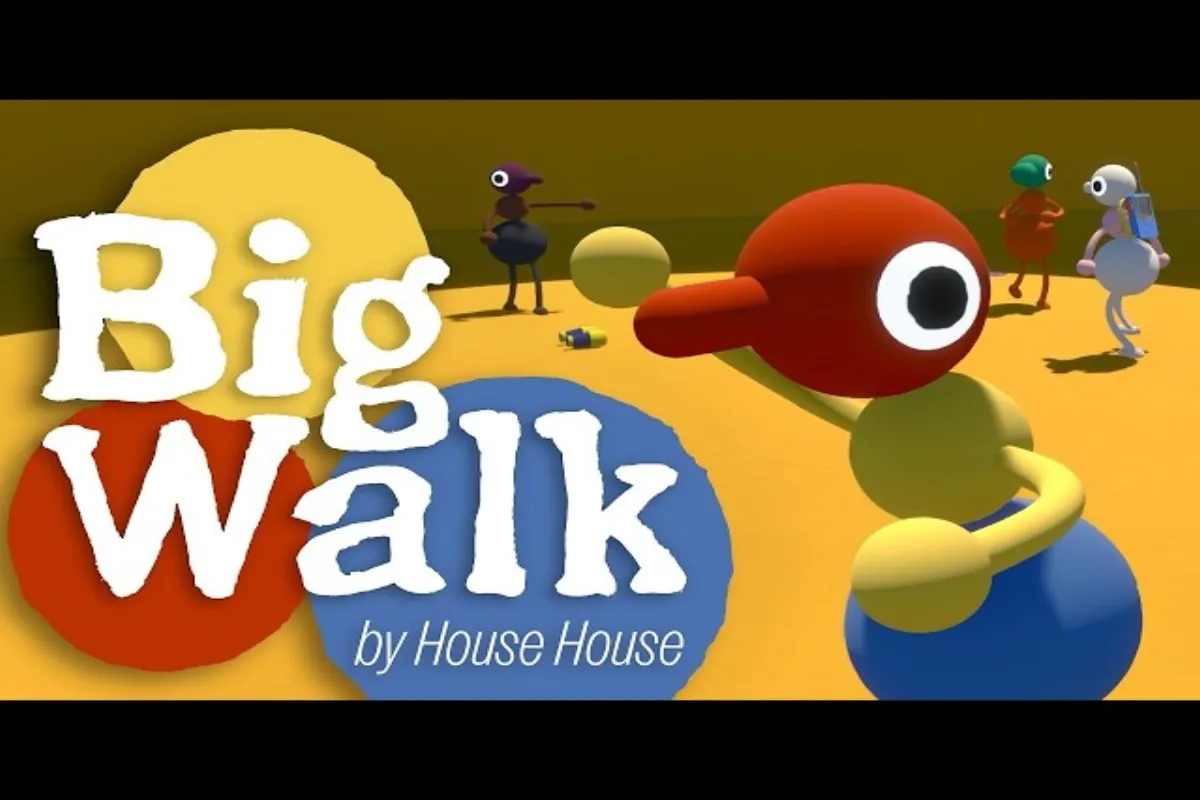
Big Walk wall muffling decides whether your team hears a warning in time, while Big Walk 3D audio tells you which direction that warning came from. Walls, glass panels, and rock formations shape every co-op puzzle in House House's 2026 adventure.
How Big Walk Wall Muffling Works in Proximity Voice Chat
Proximity voice chat is the beating heart of Big Walk, the chill co-op adventure released by House House on August 4, 2026, that supports 2 to 12 players exploring a jungle inspired by Wilson's Promontory National Park. Voice is not optional: there is no global lobby chat, no quick ping wheel, and the developer explicitly warns players not to "take any shortcuts by using Discord," according to PC Gamer's Big Walk coverage. Everything you say reaches a teammate only if the audio engine decides it should, and walls are the most common gatekeeper.
The Physics of Voice Blockers
Each structural material in the game carries a voice attenuation value that controls how much of your signal bleeds through to the other side. Soft timber absorbs mid-range frequencies, concrete reflections create muddy echoes, and metal panels reflect sharp consonants back at the speaker. Soundproof glass is the outlier: it absorbs 100% of voice, which means a teammate on the far side of a soundproof window hears nothing at all, no matter how close you stand. The Big Walk official FAQ confirms this behavior and recommends swapping to whiteboards, walkie-talkies, or gestures whenever a soundproof wall sits between you and your group.
Muffling Versus Full Block
Understanding the difference between muffling and full blocking is the first skill every co-op squad needs. A muffled voice is still legible; it sounds distant, tinny, or layered with echo, but a player can usually piece together short phrases. A fully blocked voice is silent. The game treats soundproof glass as fully blocked, which is why it shows up so often in puzzle rooms where the designer wants to force a communication swap. Other materials fall somewhere on the spectrum, and the table below captures the broad categories reported by community testing.
| Material Type | Voice Attenuation | Player Experience |
|---|---|---|
| Open air | None | Clear, full-volume chat |
| Timber planks | Low | Slight muffling, words still clear |
| Concrete or stone | Medium | Heavy muffling, hard to hear at distance |
| Metal panels | Medium-High | Sharp reflections plus partial block |
| Soundproof glass | 100% | Total silence, no signal at all |
The numbers above are community-reported approximations based on playtests shared across the Big Walk Discord. House House has not published an exact decibel scale, so treat these tiers as a practical guide rather than an official spec.
Big Walk 3D Audio: Spatial Sound and Directional Cues
Big Walk 3D audio is the other half of the proximity system, and it is what makes muffling feel fair instead of frustrating. The game renders voice as a directional sound source anchored to each player's head, which means you can rotate your character, walk a few meters left, and immediately tell whether your teammate is to your north, south, above, or below. PC Gamer's preview describes the effect as "you can tell which direction a voice is coming from," and that directional read extends to muffled signals too, because the attenuation is applied after the position is calculated.
Directional Hearing Range
The default hearing radius in Big Walk stretches roughly 25 to 30 meters in open terrain, but the moment a wall enters the line-of-sight check, that range collapses based on the material's attenuation value. A concrete wall at five meters can shrink your effective hearing range to under ten meters, while soundproof glass collapses it to zero regardless of distance. This is why designers can place two players on opposite sides of a glass observation deck and rely on the silence to force a puzzle interaction, because the audio engine refuses to bridge the gap.
Environmental Audio Layers
Beyond voice, Big Walk layers ambient soundscape channels that also react to walls. Wind, water, and wildlife are positioned in 3D space, and they muffle softly through timber while disappearing behind concrete. Experienced players use this to track rough teammate locations even when voice drops out: if you hear a distant splash but no chatter, a friend is probably near a river. For players who want a deeper dive into corridor-specific reverb behavior, the Big Walk echo in corridors guide breaks down how tunnel geometry amplifies or absorbs these layers.
| Audio Cue | Default Range | Wall Interaction |
|---|---|---|
| Player voice | 25-30m open | Muffled by material, blocked by glass |
| Footsteps | 12-15m | Soft muffling through timber, hard cut by glass |
| Splashes and wildlife | 35-40m | Echo through stone, absorbed by dense walls |
| Walkie-talkie signal | Full map | Bypasses wall muffling entirely |
| Whiteboard scribble | Local only | Travels through any material as visual cue |
Walkie-talkies sit in a separate audio channel that ignores wall muffling, which makes them the most reliable long-range tool in the game. Whiteboards, by contrast, are purely visual and travel through any material as long as the receiving player has line-of-sight to the surface, even if a glass wall sits between you and the message itself.
Wall Muffling Materials Compared: Wood, Stone, Metal, and Glass
House House built the jungle around four dominant surface types, and each one shapes co-op communication in a different way. Recognizing the material in front of you is faster than guessing, because the visual cue always matches the audio cue: a glossy green observation window is always soundproof, and a rough bark wall is always mildly absorptive. The table below ranks materials from most chat-friendly to least chat-friendly based on community testing during the August 2026 launch window.
| Rank | Material | Muffling Strength | Co-op Implication |
|---|---|---|---|
| 1 | Open clearing | None | Voice carries freely, plan routes here |
| 2 | Thin timber | Light | Voice still clear, footsteps soften |
| 3 | Bamboo fence | Light-Medium | Slight echo, useful for hide-and-seek puzzles |
| 4 | Stone wall | Medium | Muffled but legible within 5m |
| 5 | Concrete slab | High | Heavy muffling, plan for walkie-talkies |
| 6 | Metal door | High | Reflective echo plus partial block |
| 7 | Soundproof glass | Total | Total silence, requires whiteboard or gesture |
Soundproof Glass Behavior
Soundproof glass deserves its own callout because it is the only material in Big Walk with a 100% attenuation value. Designers use it deliberately to gate puzzle rooms, and the official FAQ recommends four workarounds whenever you encounter it: walkie-talkies, whiteboards, hand gestures, or physically walking around the glass to re-establish proximity. If you have ever felt stuck behind a glass wall wondering why your teammate cannot hear you, the answer is by design, and the puzzle almost always rewards you for switching communication modes rather than shouting louder.
Communication Tools That Bypass Wall Muffling
Big Walk gives every squad five core tools to fight through wall muffling, and choosing the right one for the situation is the difference between a clean solve and a frustrating reset. House House intentionally limits the toolkit to force creative use of proximity voice chat, which is why the developers pushed back against Discord-style shortcuts in early press coverage.
Walkie-Talkies, Whiteboards, and Gestures
-
Walkie-talkies transmit voice on a dedicated channel that ignores wall muffling entirely. Range is the full map, but only one squad member can broadcast at a time, which means teams need to take turns speaking.
-
Whiteboards are physical surfaces any player can write on with a stylus. The text is visible through any material as long as the receiving player has a clear line-of-sight to the board itself, even through glass observation windows, which makes them the only tool that punches through soundproof barriers.
-
Hand gestures travel as 3D-animated signals that respect wall muffling, so a teammate behind a stone wall may not see your wave. Gestures are best used at close range when voice is partially muffled but not blocked.
-
Emotes and whistles sit in the same audio family as voice and obey the same wall rules, so they are useful only when you are already in proximity.
-
Physical items like thrown rocks or dropped markers produce 3D-positioned sound cues that muffle like footsteps, which is perfect for indirect signaling without spending tool resources.
For puzzle rooms where the answer requires crossing a soundproof glass barrier, the Big Walk glass wall puzzle walkthrough covers the exact whiteboard placements and gesture sequences that early teams discovered during the launch window.
Proximity Voice Chat Tips for Big Walk Co-op Teams
Once you understand how Big Walk wall muffling and Big Walk 3D audio interact, the next step is putting that knowledge into a routine. The tips below come from community-tested squads who cleared the hardest puzzle rooms within the first week of launch.
-
Always carry a walkie-talkie in reserve. Walkie-talkies are rare pickups, and burning one early can leave your team stranded when a soundproof room shows up later.
-
Listen before you speak in dense areas. Stone corridors echo so heavily that your own voice can drown out a quieter teammate who is trying to warn you about a hazard.
-
Pair whiteboard writes with short voice cues. A teammate who can read "PRESS RED" plus hear "now" will react faster than one who only sees the text, especially when the glass is angled.
-
Use the 3D audio compass. When voice muffles down to a whisper, turn slowly and watch the directional audio indicator. The louder side is always the side with less material between you.
-
Keep one teammate outside soundproof rooms. That player acts as a walkie-talkie relay for the rest of the squad, because the relay can hear both sides of the barrier even though the inside team cannot.
-
Reset voice channels after puzzle transitions. Moving from a stone hallway into an open clearing dramatically expands your effective range, so take a breath and re-establish positions before the next challenge.
-
Don't rely on Discord. The developer has been explicit that external chat breaks the intended puzzle design, and teams using Discord tend to skip the communication tools that make Big Walk special.
If your audio suddenly cuts out completely, even in open terrain, the Big Walk not working troubleshooting guide covers the most common fixes, including driver resets and the known cross-platform mute bug that surfaced during the launch weekend.
Frequently Asked Questions
Q: Can I play Big Walk solo without other players?
While Big Walk is designed as a cooperative experience, you can explore the world solo. However, certain puzzles and areas require at least two players to complete, so solo walkers will find some content gated behind multiplayer requirements in the current version of the game.
Does soundproof glass block voice in Big Walk permanently?
Yes, soundproof glass blocks voice 100% of the time, which the official FAQ confirms. Players on opposite sides hear total silence regardless of distance, so teams should switch to walkie-talkies, whiteboards, or gestures whenever a glass barrier stands between them.
How far does Big Walk 3D audio carry in open terrain?
In open terrain without walls, Big Walk 3D audio carries roughly 25 to 30 meters before voices start fading. The exact range varies with environmental noise like waterfalls or wind, but the directional read stays accurate even at the edge of hearing, so players can still tell where a teammate is standing.
Can I still hear my friends through stone walls?
Partially. Stone walls muffle voices heavily but do not block them entirely, so you will hear a tinny, distant version of your friend's speech within roughly five meters of the wall. Beyond that range, switch to a walkie-talkie to maintain reliable contact.
Are walkie-talkies better than whiteboards for soundproof glass rooms?
They solve different problems. Walkie-talkies transmit voice across the entire map but require a free broadcast slot, while whiteboards travel through any material as long as someone has line-of-sight to the board. For a soundproof glass room, whiteboards are usually faster because the glass is designed to be seen through, not heard through.