
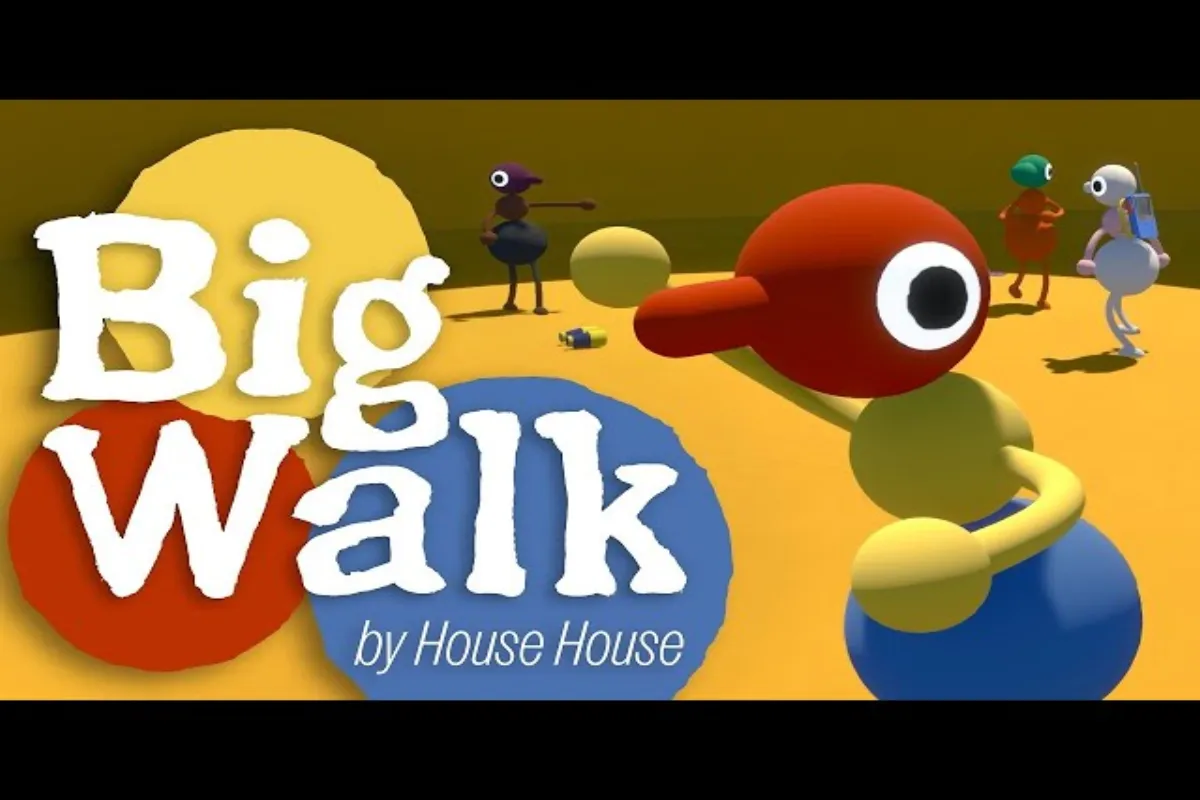
The Big Walk development story begins not in a polished studio, but inside a Melbourne apartment during the COVID lockdown, when the House House team sketched out a one-page pitch that would eventually grow into a six-year creative marathon. Released on August 4, 2026 through publisher Panic, the co-op wilderness adventure carries forward everything the studio learned from Untitled Goose Game, then layers it with a diegetic music system that makes the Big Walk soundtrack feel like it belongs inside the bush rather than playing over it.
From Lockdown Sketch to One-Page Pitch
The seeds of the Big Walk development story were planted in 2020, when Melbourne's strict pandemic lockdown forced House House into remote work. Without access to a proper office, designers sketched ideas on whiteboards, narrated concepts over voice memos, and treated each walking break through their neighborhood as a research session. That restlessness — wanting to be outside, wanting company, wanting a game that felt like a hike with friends — became the entire creative brief.
By early 2021 the team had condensed that brief into a single page and pitched it directly to Panic, the publisher who had championed Goose Game's slow-burn success. According to a GamesIndustry.biz interview with the studio, the pitch landed almost immediately because Panic recognized the same patience-driven design DNA that had defined their previous collaboration. The deal cleared the way for full production, but House House deliberately resisted any Early Access strategy — a decision that shaped the next five years of work.
| Pitch Element | Original Lockdown Idea | Final Shipped Form |
|---|---|---|
| Core fantasy | Walking outside with friends | 2-12 player co-op wilderness hike |
| Setting inspiration | Melbourne suburban trails | Wilson's Promontory National Park |
| Music concept | Birdsong as ambience | Diegetic Big Walk soundtrack with location-triggered songs |
| Length target | Undefined | Hand-crafted beginning-to-end experience |
That table captures something important about House House's design philosophy: every Big Walk mechanic, from the proximity voice chat to the in-world instruments, traces back to that single locked-down impulse to feel less alone outside.
The Six-Year Development Timeline
Most indie co-op games ship in eighteen to thirty months; Big Walk took six years. That timeline matters because it explains why the wilderness, the comedy, and the Big Walk soundtrack feel so textured when you actually play. The studio cycled through multiple experimentation phases, prototyping tools that players would use to communicate (radios, signal mirrors, kites, harmonicas) long before any level art existed.
Experimentation Phase (2021-2023)
The first two years were almost entirely R&D. Designers built a "walking engine" that simulated fatigue, pace variation, and stumble animations so that the on-screen avatar actually behaved like a tired hiker rather than a skating character model. Programmers prototyped the proximity voice system that would later become the game's signature mechanic — voices fade naturally with distance, but in Big Walk you can hear someone through a bush that you cannot see, which subtly rewards sticking together.
Vertical Slice Phase (2023-2024)
Once the core movement and communication felt right, House House carved out a single biome — the southern coastal stretch inspired by Wilson's Promontory — and turned it into a playable slice. It was during this phase that the Big Walk soundtrack took its current shape. Composer AKSFX joined alongside Sam Gill and Luke Neher, and the trio were sent field recordings of real Australian bush ambience to score against, rather than abstract mood boards.
Polish and Co-op Stress Test (2025-2026)
The final eighteen months focused on stress-testing the 2-12 player co-op systems. House House ran internal playtests with up to fifteen staff members online at once, deliberately breaking their own netcode, then rebuilding it. Sound designer Em Halberstadt layered in the environmental foley — creek splash, leaf crunch, kookaburra calls — that gives the world its tactile identity.
For a deeper look at the chronological milestones, see our Big Walk development timeline breakdown, which maps each prototype phase to specific shipped features.
Crafting the Big Walk Soundtrack
The Big Walk soundtrack is one of the most unusual creative choices in modern indie gaming because the music is not background audio — it physically exists in the world. When your co-op group approaches a specific clearing, ridge, or cave, you can hear instruments playing from inside that location. Walk closer and the song gets louder; walk away and it fades into the wind. This diegetic approach means players literally have to chase the music across the map if they want to hear a track in full.
The Composer Trio
Three composers collaborated on the score, and each brought a different flavor to the wilderness:
| Composer | Contribution to Big Walk Soundtrack | Notable Style |
|---|---|---|
| AKSFX | Lead theme, ridge-top ambient pieces | Acoustic guitar layered with field recordings |
| Sam Gill | Forest and creek-side compositions | Fingerpicked folk with modular synth washes |
| Luke Neher | Cave and night-time tracks | Slow-burn cinematic drones |
The trio worked from the same field-recording pack House House captured on location visits to Wilson's Promontory National Park, which means every instrument you hear in the game was, in some sense, composed in conversation with the real Australian bush.
Diegetic Music System Explained
Unlike a conventional game soundtrack, the Big Walk soundtrack cannot be paused, muted in a settings menu, or skipped with a button press. Because the music is emitted by physical objects inside the world, players encounter it organically. A group splitting up might hear two completely different songs at once depending on which trail they took — an effect that turns the soundtrack into a kind of emergent co-op storytelling.
According to the official Big Walk presskit, this design choice was deliberate: the team wanted players to associate specific emotional memories with specific locations, so that returning to that ridge six hours into the campaign would carry the weight of the first time you heard that song. For more on the studio's broader design philosophy, the Big Walk House House history piece covers how this approach evolved from their earlier Goose Game work.
Sound Design and Musical World-Building
Music is only half of what makes the game's audio feel alive. Em Halberstadt led sound design across the entire project, recording and processing thousands of individual foley elements — boots on gravel, rain on a tarp, a kettle whistling at a campsite, the soft creak of a backpack strap. Each effect was tuned to react to the player's proximity voice chat system, so when a friend whispers to you from twenty meters away, their voice mixes realistically with the environmental ambience around them.
Audio Layers at a Glance
| Audio Layer | Trigger Condition | Player Effect |
|---|---|---|
| Big Walk soundtrack (diegetic) | Walking near a music location | Discovers new songs organically |
| Foley (creeks, leaves, footsteps) | Always-on | Grounds the world tactilely |
| Proximity voice | Other players within ~25m | Creates natural co-op intimacy |
| Wind & weather | Biome and time-of-day | Signals navigation clues |
The layering is what makes exploration feel rewarding even when no puzzle is being solved. You might follow the sound of a distant harmonica through a forest, only to find another player already sitting at the source jamming on an in-world instrument. Those unscripted moments are where the Big Walk development story quietly pays off the years of patient audio design work.
For a fuller account of the studio's iterative audio process, our Big Walk six year development retrospective walks through every major pivot House House made along the way.
Why House House Resisted Early Access
One of the most interesting parts of the Big Walk development story is what the team didn't do. Throughout the six-year build, House House declined multiple opportunities to ship an Early Access build, even when community pressure and publisher interest made a public beta financially tempting. The reasoning was practical: proximity voice chat, diegetic music, and the carefully tuned walking engine all depend on the full wilderness map being playable end-to-end. A partial build would have made the soundtrack feel scattered rather than purposeful.
| Decision | Risk Taken | Result at Launch |
|---|---|---|
| No Early Access | Lost two years of pre-order revenue | Coherent Big Walk soundtrack placement |
| Full map at launch | Higher development cost | $19.99 price point preserved |
| Hand-tuned puzzles | Smaller content volume | Every puzzle memorable, none filler |
| Single coherent ending | Less replayability hook | Strong narrative payoff |
That commitment to a complete experience is also why the Big Walk soundtrack has so few "throwaway" tracks — every song was placed deliberately, then tested across multiple player counts to make sure it never felt intrusive when twelve hikers all happened to converge on the same clearing.
To see how this studio-wide philosophy compares with their Untitled Goose Game era, read the Big Walk House House developer profile, which traces how a small Melbourne team grew into a six-year operation.
Launch Day and What's Next
Big Walk launched on August 4, 2026 across Windows (Steam), macOS, PlayStation 5, and Nintendo Switch 2 at a $19.99 USD price point, with a 25% launch-week discount bringing it to roughly $14.99. Early player response has been warm, especially around the soundtrack — community threads are already trading screenshots of favorite in-world music locations, which is exactly the kind of organic discovery loop House House designed for.
Looking forward, the studio has hinted at potential post-launch updates that could add new biomes without disturbing the carefully tuned Big Walk soundtrack placement. Because every song is tied to a specific in-world emitter, future expansions would simply add new emitters in new terrain — a clean design choice that future-proofs six years of careful work.
Frequently Asked Questions
Q: Can I play Big Walk solo without other players?
While Big Walk is designed as a cooperative experience, you can explore the world solo. However, certain puzzles and areas require at least two players to complete, so solo walkers will find some content gated behind multiplayer requirements in the current version of the game.
Who developed Big Walk and how long did it take?
Big Walk was developed by House House, the Melbourne indie studio behind Untitled Goose Game, and the full Big Walk development story spans roughly six years from the initial lockdown pitch in 2020 to launch on August 4, 2026. The project was published by Panic.
Who composed the Big Walk soundtrack?
The Big Walk soundtrack was composed by a trio of musicians — AKSFX, Sam Gill, and Luke Neher — with sound design led by Em Halberstadt. All three composers worked from field recordings captured at Wilson's Promontory National Park to keep the score grounded in real Australian wilderness.
Why is the Big Walk soundtrack diegetic instead of background music?
House House deliberately made the Big Walk soundtrack diegetic so the music physically exists in the world at specific locations. This means players discover songs by walking near them rather than hearing them on a generic audio layer, which keeps the experience intimate and rewards exploration across the 2-12 player co-op sessions.
What is the Big Walk development story's biggest design lesson?
The biggest lesson from the Big Walk development story is patience. By refusing Early Access and protecting a six-year timeline, House House was able to ship a coherent experience where every mechanic — proximity voice chat, the walking engine, the Big Walk soundtrack — reinforces the fantasy of hiking with friends instead of competing with it.